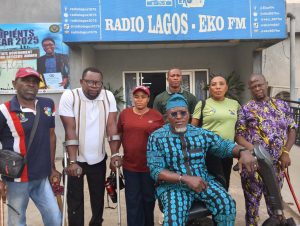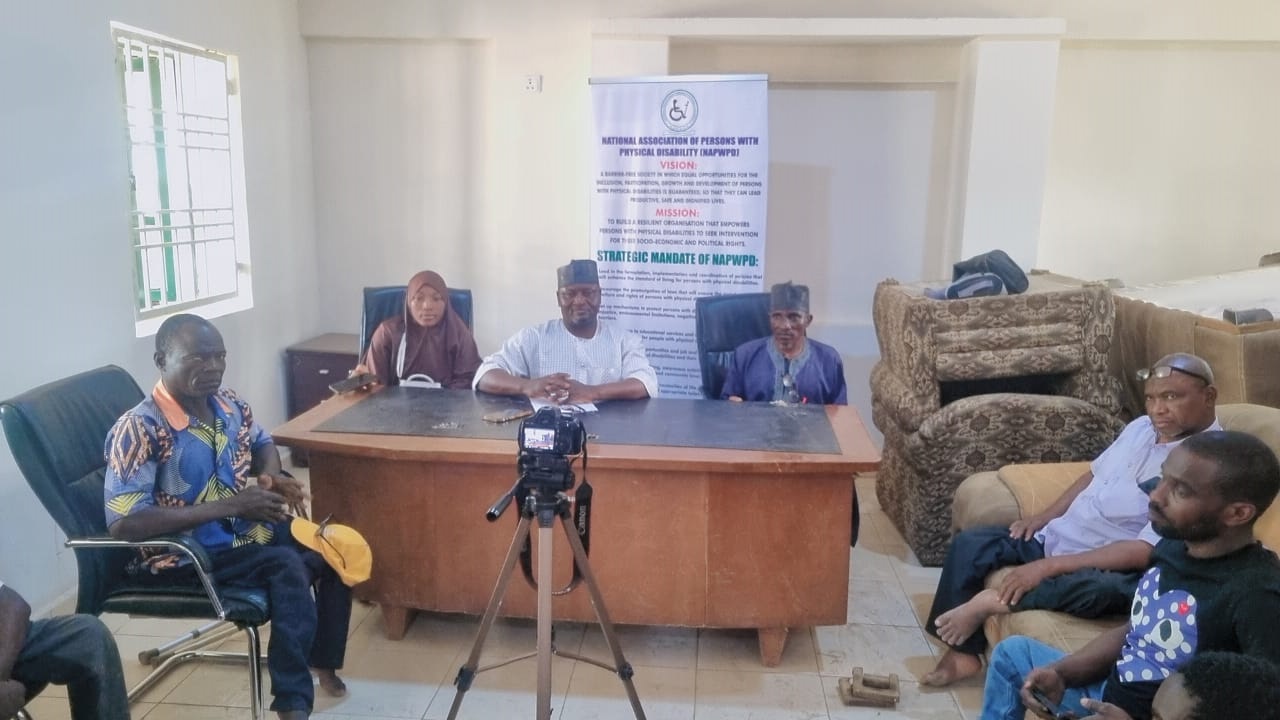
The National Association of Persons with Physical Disabilities (NAPWPD) has intensified its national advocacy for disability inclusion by convening a high-level press briefing in Kaduna, calling for urgent and coordinated action to address persistent accessibility barriers across Nigeria.
The briefing, held at the Kaduna State Disability Affairs Commission, brought together media practitioners, civil society actors, and key stakeholders to spotlight the everyday realities faced by persons with physical disabilities and the systemic challenges that continue to limit their full participation in society.
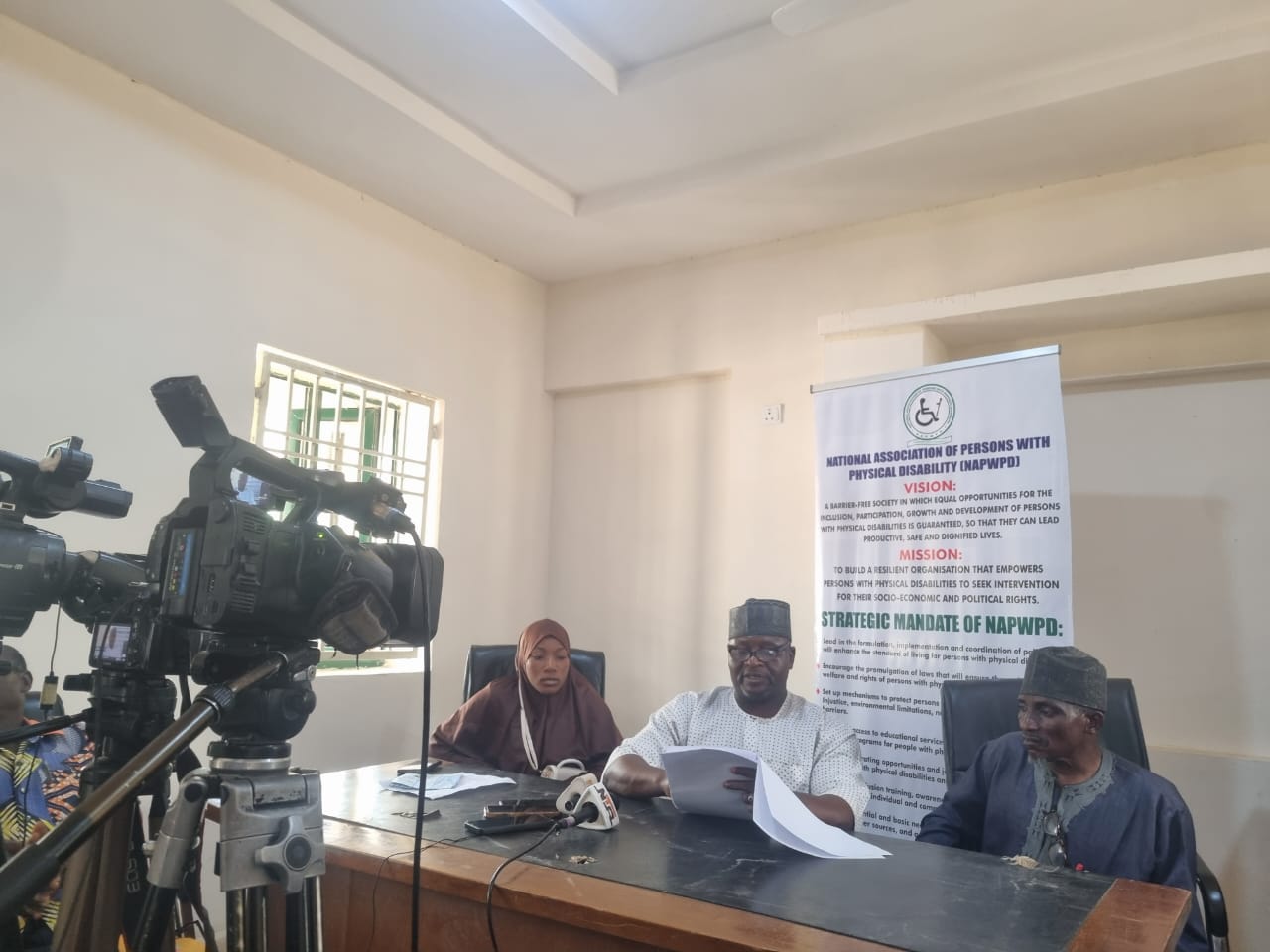
Speaking at the event, Rilwan Mohammed Abdullahi, National President of NAPWPD, underscored the urgency of addressing gaps in infrastructure, transportation, and policy implementation. He noted that despite the provisions of the Discrimination Against Persons with Physical Disabilities (Prohibition) Act, 2018, many public and private spaces remain inaccessible, effectively excluding persons with disabilities from essential services and opportunities.
“Accessibility is not a privilege—it is a fundamental requirement for inclusion,” he stated, emphasizing that the absence of basic features such as ramps, elevators, and accessible facilities continues to restrict access to government offices, schools, healthcare services, and economic opportunities.
The association highlighted transportation as a critical area of concern, noting that most public and commercial transport systems are not designed to accommodate persons with disabilities. This, according to NAPWPD, significantly limits mobility and reinforces barriers to education, employment, and healthcare access.
Beyond infrastructure, the briefing also drew attention to the broader systemic issues contributing to exclusion, including low awareness of disability rights and weak enforcement of existing laws. NAPWPD stressed that these challenges are not merely physical but are rooted in policies, systems, and attitudes that fail to recognize and accommodate diversity.
A key focus of the engagement was the role of the media as a driver of social change. NAPWPD called on journalists and media organizations to move beyond episodic coverage and adopt sustained, issue-based reporting on disability rights. The association encouraged investigative reporting on accessibility gaps and greater public education on legal obligations and rights under the Disability Act.
The briefing further reinforced the message that inclusive infrastructure benefits not only persons with disabilities but also other members of society, including older persons, pregnant women, and individuals with temporary mobility challenges.
NAPWPD expressed appreciation to media partners, civil society organizations, and stakeholders for their continued support, describing them as critical allies in advancing disability rights in Nigeria. The association reaffirmed its commitment to working collaboratively with government, private sector actors, and development partners to drive practical and sustainable solutions.
This media engagement marks a strategic step in elevating disability issues within national discourse, while strengthening accountability and collective responsibility for building a more inclusive and accessible society.